

Product Detail
Home – Pineleon
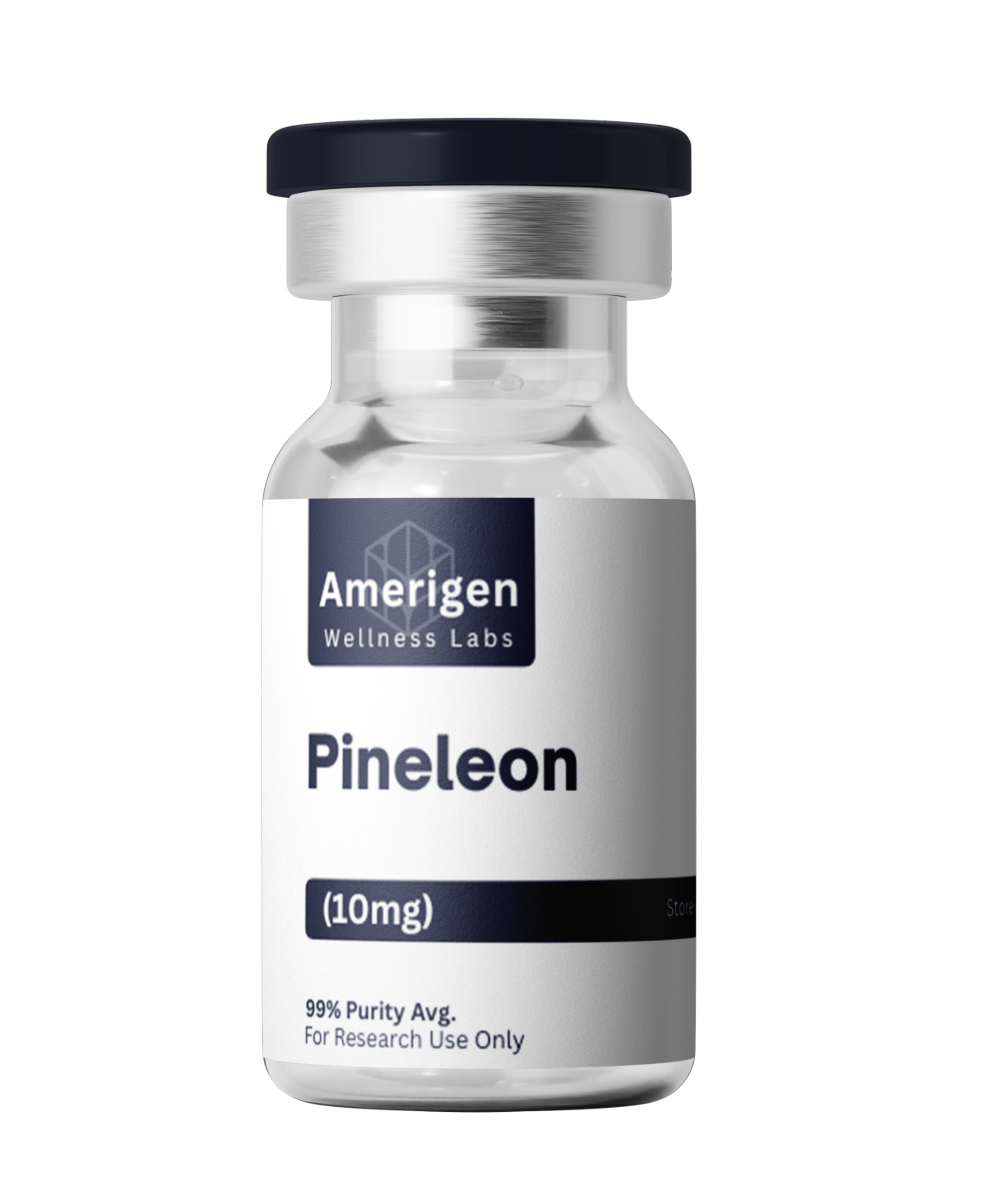
Pineleon
$64.99
Pineleon is a peptide investigated for its effects on circadian rhythm and neuroprotection, often related to pineal gland signaling and melatonin pathways. Research is mostly preclinical.
17 in stock
Physical Appearance:
White powder
Salt form:
Acetate
Sequence:
Glu-Asp-Arg
Molecular Mass:
418.4
CAS NO.:
175175-23-2
Solubility:
Bacteriostatic water 1ml/vial
- Description
- Key Benefits / Science
- How to Use
- Reviews
Pineleon (Pinealon), also known as the EDR peptide, is a synthetic tripeptide composed of three amino acids: Glutamic acid (Glu), Aspartic acid (Asp), and Arginine (Arg). It belongs to the class of short peptide bioregulators developed in Russian scientific research, often derived from or modeled after polypeptides found in brain tissue (such as fractions from Cortexin).
As a small, low-molecular-weight peptide, Pineleon is able to cross the blood-brain barrier effectively. It is believed to interact directly with DNA in neuronal cells, modulating gene expression to support normal cellular function. Pineleon is primarily recognized for its neuroprotective and geroprotective properties, with a focus on optimizing brain and central nervous system health. It is commonly studied for its potential to counteract age-related cognitive decline, support circadian rhythm regulation, and protect neurons from oxidative stress and other damaging factors.
Research on Pineleon (EDR) has highlighted several neuroprotective and cognitive-supportive effects, primarily in animal models and in vitro studies:
- Neuroprotection and Antioxidant Effects Pineleon demonstrates strong neuroprotective properties by reducing reactive oxygen species (ROS) accumulation and preventing apoptosis in neurons under stress conditions such as hypoxia, oxidative damage, or hyperhomocysteinemia. It helps protect brain cells from oxidative stress and improves neuronal survival.
- Cognitive Function and Memory Support In animal studies, Pineleon has been shown to improve cognitive performance and memory. Prenatal administration protected rat offspring from hyperhomocysteinemia-induced cognitive deficits and increased resistance of cerebellar neurons to oxidative stress. It may help restore age-related declines in learning and memory processes.
- Circadian Rhythm and Sleep Regulation As a pineal gland-related bioregulator, Pineleon supports normal circadian rhythm function and may help regulate sleep-wake cycles. It is often studied alongside other pineal peptides for its role in maintaining healthy melatonin-related pathways and overall brain homeostasis.
- Anti-Aging and Cellular Vitality (Geroprotection) Pineleon is classified as a geroprotector. It appears to modulate gene expression in brain cells, supporting mitochondrial function, reducing cellular aging processes, and promoting longevity-related mechanisms in neural tissue. It may help counteract age-associated decline in brain function.
- Potential Benefits in Stress and Brain Injury Models Research indicates Pineleon may offer protective effects in models of brain stress, hypoxia, or injury, helping maintain cognitive function and neuronal integrity under challenging conditions.
Reviews
There are no reviews yet.