

Product Detail
Home – HMG
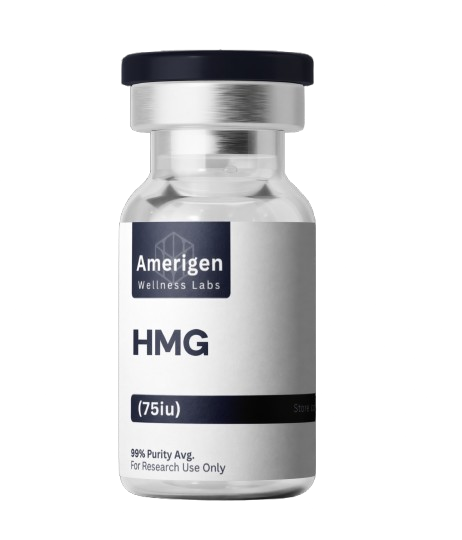
HMG
$74.99
HMG is primarily used in assisted reproductive technologies (ART) such as ovulation induction, intrauterine insemination (IUI), and in vitro fertilization (IVF). It is also employed in the treatment of hypogonadotropic hypogonadism in both sexes to restore fertility and secondary sexual characteristics.
20 in stock
- Description
- Key Benefits / Science
- How to Use
- Reviews
Human Menopausal Gonadotropin (HMG), also known as menotropins, is a purified hormonal preparation extracted from the urine of postmenopausal women. It contains a mixture of two naturally occurring gonadotropins: follicle-stimulating hormone (FSH) and luteinizing hormone (LH), typically in an approximately 1:1 ratio (though highly purified versions may vary slightly).
In women, FSH stimulates the growth and maturation of ovarian follicles, while LH supports follicular development, steroid hormone production, and triggers final oocyte maturation and ovulation. In men, the FSH component promotes spermatogenesis by acting on Sertoli cells in the testes, and the LH component stimulates Leydig cells to produce testosterone.
Originally developed in the 1960s, HMG is primarily used in assisted reproductive technologies (ART) such as ovulation induction, intrauterine insemination (IUI), and in vitro fertilization (IVF). It is also employed in the treatment of hypogonadotropic hypogonadism in both sexes to restore fertility and secondary sexual characteristics. HMG is administered via subcutaneous or intramuscular injection and is available in various formulations, including highly purified versions for improved consistency and reduced impurities.
Research has established HMG as an effective gonadotropin therapy for fertility restoration and hormonal support, with the following key confirmed effects:
-
- Ovulation Induction and Female Infertility HMG effectively stimulates ovarian follicle development and induces ovulation in women with anovulatory infertility or hypogonadotropic hypogonadism. Clinical studies show high ovulation rates (up to 90%) and pregnancy rates of 20–25% per cycle in suitable patients. It is widely used in controlled ovarian stimulation protocols for IVF/ICSI, often providing comparable or slightly better live birth rates than recombinant FSH alone in certain long GnRH agonist protocols.
-
- Male Hypogonadotropic Hypogonadism and Spermatogenesis In men with congenital or acquired hypogonadotropic hypogonadism (CHH), HMG (often combined with hCG) restores spermatogenesis, increases testicular volume, and improves fertility outcomes. Studies report successful sperm production in 25–85% of patients depending on the regimen and duration, with pregnancy rates reaching 38–75% in couples where the male partner completes adequate therapy. HMG provides both FSH and LH activity, making it particularly effective for stimulating Sertoli cell function and intratesticular testosterone production compared to FSH monotherapy.
-
- Testicular Development and Testosterone Production HMG therapy increases testicular size, elevates serum testosterone levels, and supports pubertal development in hypogonadal males. When used alongside hCG, it often achieves better spermatogenesis recovery than GnRH pump therapy in some comparative studies, though results vary by patient age, baseline testicular volume, and treatment duration.
- Assisted Reproductive Technologies (ART) In IVF cycles, HMG contributes to multi-follicular development and improves oocyte quality and quantity in selected patient groups. Some meta-analyses suggest a modest advantage (≈3–4% higher live birth rate) over recombinant FSH alone in specific protocols, though outcomes are generally similar across modern highly purified preparations.
Reviews
There are no reviews yet.